Research Article
Opinion Article
Aim & Scope
Is art a science in itself? It is imperative to evolve into the axis of scientificity of all the products that art reveals together with other branches of science. It is no longer possible to evaluate art only and its interdisciplinarity has become mandatory. In this respect, it has become a mandatory trend for researchers to turn to interdisciplinary research and applications of art. Journal for Interdisciplinary Art & Education (JIAE) aims to be an academic discussion platform that was born in Turkey, the intersection point of eastern and western civilizations, and attracts the whole world to itself with the effect of this intersection. Education of art is the first necessity in the development of art. In this respect, JIAE has focused on the visibility of its education in academic publications as well as the interdisciplinarity involved in the arts.
It aims to achieve the following objectives adopted by all stakeholders of JIAE;
* To be visible and respected by the most important academicians in all fields of art (such as music, painting, graphics, architecture),
* To be the most read and cited academic journal,
* To be the most preferred academic resource in art education applications,
* To take place in the most important indexes of the world,
* To be a school that directs academic discussions (such as congresses, symposiums)
The JIAE is an international refereed scientific journal which publishes review and research article, teaching techniques and activities for interdisciplinary art education, book reviews and interviews in English. Submitted articles are evaluated in a double blinded peer-reviewed fashion. The JIAE is an open access journal, published 4 issues a year; March, June, September, December. JIAE holds copyrights for all articles published in the journal.
The JIAE is an international refereed scientific journal which publishes review and research article related scopes are as below;
* Art education (all fields, music, painting, graphics, dance, architecture, sculpture...)
* Interdisciplinary art education
* Education and training of the art teacher
* Art talent
* Art education for special needs of children
* Art education for gifted students
* artistic creativity
* Educational policy on art education
* Teaching of the fine art sciences
* Teaching of the performing art
* Art and related interdisciplinary STEAM education for art
* Teaching techniques and activities in the education of art
Author Guidelines
Thank you for choosing JIAE to submit your article. The instructions we will give you will relieve you of your article being ready for the peer review process, turning it into production and reaching the publication stage smoothly. Please take some time to read and follow the steps. We declare that we will support you at every stage, our contact information (e-mail and whatsapp) in this regard is on our website. Do not hesitate to contact us.
This journal uses the Dergipark Journal System. This system is an academic journal software developed by the Scientific And Technological Research Council of Turkey and is still being developed. Please read the guide for Dergipark Journal System authors before making a submission. The complete instructions for preparing your article and submitting it to JIAE are given below.
About the JAIE
Journal for the Interdisciplinary Art and Education is an international, peer-reviewed journal that publishes original research with high quality and potential for impact. Please read JIAE's Aims & Scope and Peer Review Policy statements. Please note that this journal only publishes articles in English.
Journal for the Interdisciplinary Art and Education only accepts original articles.
Journal for the Interdisciplinary Art and Education has chosen the Open Access model to reach the real audience, increase the visibility, attribution and readability of your articles, and make scientific knowledge a common commodity for all humanity, rather than just a high-income commodity for developed countries or an elite. You can read statements about this Open Access Policy.
Peer Review and Ethics
JIAE and its affiliated publishing house, Genç Bilge Publishing, declare their commitment to peer review with high ethical standards. Your article will go through Editorial Prereview after Similarity Report review (must be below 15%), pre-review of ethical committee permissions. This is the stage where the decision is made about the suitability and originality of your article for JIAE's Aims & Scope. This is how your article is ready for peer review by independent and field experts. In line with JIAE's Peer Review Policy statements, peer review is carried out quickly and efficiently, with minimum deficiencies, maximum ethical sensitivity.
Please note that before submitting your article to the Journal for the Interdisciplinary Art and Education; to prepare your Similarity Reports (you can use Turnitin, Ithenticate software), Ethics Committee Permissions, Cover Letter, Conflict of Interest, Author Contributions statements in which you claim the originality of your article.
Getting Your Article Ready
Writing Rules
Manuscripts should be written in APA style.
Manuscripts should be submitted in MS Word.
It should be use a normal 11-point EB Garamond for text.
All portions of the manuscript must be typed 1,15
It should not be indent the first line of paragraphs, and other paragraphs are indented 0.50 cm.
Please give short quotations in italics within the quotation marks " " and the page number cited at the end in parentheses.
Please note that long quotations should be indented without quotation marks.
Article Sections and Order
Abstract (350-450 words)
Introduction (included in literature review, conceptual framework, importance)
Problem of Study (Main and sub-problems)
Method (included in Research Model, Participants-Sampling, Data Collection Tools, Data Analysis, Procedure)
Results (It should be presented depending on the research problem)
Discussion (Up-to-date citations from quality journals and original articles in important indexes should be given)
Conclusion (Must be at least one page, present the entire article in summary)
Recommendations ( For Researchers and For Applicants)
Limitations of Study
Acknowledgements (Thanks, support funds, permissions, conflict interests, authors' contributions should be written in this section)
Biodata of Authors (Photo, name-surname, graduated schools, important studies, specialties, academic social media links; Like ResearchGate, AcademicEdu)
References (It should be meticulously written in accordance with APA style, checked, not self-citation)
Appendix
In order for your article to be ready, we offer you a word version of a published article as a template. Please edit the page number, header and footer settings without changing them. We present you Templated Article for JIAE.
Page Limit
A typical paper for this journal should be no more than 35 pages, inclusive of: Appendix
References
The References section is one of the most important parts of the article. Please prepare it in accordance with the APA style, with 10 points and single spacing.
Checklist for Submit an Article
Author Information Details and Records to Dergipark Journal System: Please check that all authors have registered with the Dergipark Journal System before submitting an article. Please note that the ORCID of each author will be requested by the Dergipark Journal System during registration. Therefore, do not forget to register the ORCID beforehand. Authors are registered to the system only after they approve the verification emails sent by the system. We recommend that authors fill out their profiles in the Dergipark Journal System completely.
Cover Letter: Do not forget to prepare the Cover Letter stating the ethical elements, originality and other aspects of your work.
Copyright Transfer Agreement Form: This form is requested to be uploaded while submitting the articles of the authors. Download the form by clicking this link, make sure that all authors have signatures.
Similarity (Plagiarism) Report: You can use software such as Turnitin, Ithenticate for this report. Note that the similarity rate must be less than 12%.
Keywords: Identify up to five key words. Make sure that keywords are effective and discoverable.
Ethics Committee Permission: If your research is a research that requires ethics committee approval, this permission must be obtained and uploaded during the article submit process.
Figure, Photos: Please upload the high resolution files of the figures and photos in the Manuscript separately during the submission.
Data Sharing: To allow other researchers to use the data you use in your research, or for transparency, use the infrastructure of internationally supporting organizations and indicate this in the manuscript.
Submitting Your Article
Submission of your article is done through Dergipark Journal System. This system is a software where all records are kept, article progress reports can be created, and the corresponding author can submit it on his own. The article submission steps are quite easy. However, due to the software, you may not be able to click the confirmation button in the pop-up that appears at the last stage, you may need to adjust your computer's settings or use another computer for this.
You can always get help during the submission process by using the contact information on our website. Please make sure that all authors are registered in the system beforehand and complete the submit process.
Publication Charges
There are no submission fees, publication fees or page charges for this journal.
Queries
If you have any queries, please contact us here.
Updated 22nd October 2022
Ethical Principles and Publication Policy
Ethical Principles and Publication Policy
This journal follows and accepts the internationally accepted publishing ethical principles and applies them in all its processes. In particular, the journal team, about the accumulation and experience of COPE over the years, participates in discussions, shares and sets good examples in order to educate itself.
JIAE has determined ethic statements based on “Code of Conduct and Best Practice Guidelines for Journal Editor, Core Practices and Guidelines. These ethical principles must be followed by all stakeholders of JIAE (publisher, editors, reviewers, authors).
We can list these principles as follows;
* Makes and implements editorial prevention against variants of Plagiarism containing all scientific definitions.
* Requests documents for Ethical Committee Permissions from authors during the article submission process
* Strictly examines the unethical behaviors of authors such as self-citation during the article pre-review and article review process.
* Strictly scrutinize ethical concerns such as "ghost author".
* It examines the data in cases that may cause publication concerns, as ensuring the transparency of the authors
* It asks academics with editorial duties to undertake not to communicate with authors except during article review processes.
* Editorial boards knows that the quality of JIAE is directly related to its commitment to ethical principles.
* The editorial team is aware that their role in JIAE is not a factor to increase their popularity, each member gives their commitment.
* Collaborates with authors' institutions on ethical issues
* The increase in indexing and the popularity of the journal never changes its strict adherence to the application of ethical principles.
* The authors, editors, referees and members of the editorial board are informed about compliance with ethical principles and commitments are requested.
* The authors, referees, editors and editorial board members do not know about ethical issues as an excuse, and they are dismissed from JIAE.
* All information brought to the literature, practices, models and experiences by COPE must be known and applied by the stakeholders.
* Regarding the hesitation experienced in practices related to ethical problems; Under the chairmanship of the chief editor, the JIAE Ethics Unit (JEU), which consists of 4 members of the editorial board and 5 people in total, undertakes the task of consulting. In order to increase the accuracy of its decisions, the JEU should seek advice from institutions that work with international ethical issues.
* The concept of double-bilinded peerreview is made a fact by choosing independent and expert reviewers with all its details, it is never left in discourse, it is applied. For this case, the review process reports recorded in the Dergipark Journal System are always available as proof/evidence.
Now let's explain some of the basics for authors, reviewers and editors.
Plagiarism
Plagiarism the unethical act of copying someone else’s prior ideas, processes, results or words without explicit acknowledgement of the original author and source. Self-plagiarism occurs when an author utilizes large part of his/her own previously published work without using appropriate references. This can range from getting the same manuscript published in multiple journals to modifying a previously published manuscript with some new data.
Types of Plagiarism
Full Plagiarism: Previously published content without any changes to the text, idea and grammar is considered as full plagiarism. It involves presenting exact text from a source as one’s own.
Partial Plagiarism: If content is a mixture from multiple different sources, where the author has extensively rephrased text, then it is known as partial plagiarism.
Self-Plagiarism: When an author reuses complete or portions of their pre-published research, then it is known as self-plagiarism. Complete self-plagiarism is a case when an author republishes their own previously published work in a new journal.
Measures, Obligations and Responsibilities of JIAE
Journal for the Interdisciplinary Art and Education (JIAE) is strictly against any unethical act of copying or plagiarism in any form. Plagiarism is said to have occurred when large portions of a manuscript have been copied from existing previously published resources. All manuscripts submitted for publication to JIAE are cross-checked for plagiarism using Turnitin/ iThenticate software.
Procedure
JIAE meticulously requests and checks plagiarism reports from authors for their article submissions (Similarity over 15% is unacceptable). Papers found to be plagiarized during initial stages of review are out-rightly rejected and not considered for publication in the journal. In case a manuscript is found to be plagiarized after publication, the Editor-in-Chief will conduct preliminary investigation, may be with the help of a suitable committee constituted for the purpose. If the manuscript is found to be plagiarized beyond the acceptable limits, the journal will contact the author’s Affiliation and Funding Agency, if any. A determination of misconduct will lead JIAE to run a statement bidirectionally linked online to and from the original paper, to note the plagiarism and provide a reference to the plagiarized material. The paper containing the plagiarism will also be marked on each pages. This situation is conveyed to the relevant unit (JEU) in a report.
Figure 1. Plagiarism Intervention Flow Chart
Plagiarism Concern Status: JIAE respects intellectual property and aims at protecting and promoting original work of its authors. Manuscripts containing plagiarized material are against the standards of quality, research and innovation. Hence, all authors submitting articles to JMETP are expected to abide ethical standards and abstain from plagiarism, in any form.
Author(s) Request for Defense: In case, an author is found to be suspected of plagiarism in a submitted or published manuscript then, JIAE shall contact the author (s) to submit his / her (their) explanation within two weeks, which may be forwarded to the JEU constituted for the purpose, for further course of action. If JIAE does not receive any response from the author within the stipulated time period, then the director of authors’ affiliations to which the author is affiliated shall be contacted to take strict action against the concerned author.
Ethics Unit Report Preparation: JEU prepares a report containing the opinions and evidences of the plagiarism case by taking the defenses of the authors. He gives this report to the chief editor.
Article Related Sanction: JIAE shall take serious action against published manuscripts found to contain plagiarism and shall completely remove them from JIAE journal website (https://dergipark.org.tr/en/pub/jiae) and other third party websites where the paper is listed and indexed. The moment, any article published in JIAE database is reported to be plagiarized, JIAE will constitute a JEU to investigate the same. Upon having established that the manuscript is plagiarized from some previously published work, JIAE shall support the original author and manuscript irrespective of the publisher and may take any or all of the following immediate actions or follow the additional course of actions as recommended by the committee:
JIAE shall remove the PDF copy of the published manuscript from the website (https://dergipark.org.tr/en/pub/jiae) and disable all links to full text article. The term Plagiarized Manuscript shall be appended to the published manuscript title. JIAE shall disable the author account with the journal and reject all future submissions from the author for a period of 3 years or even ban the authors permanently. JIAE may also display the list of such authors along with their full contact details on the JIAE website. (https://dergipark.org.tr/en/pub/jiae)
Sanction on Authors: JIAE editorial office shall immediately contact the Head of the Affiliations to which the author(s) is (are) affiliated to take strict action against the concerned author(s).
Ethical Duties and Responsibilities of All Stakeholders Related to Editorial Processes
In the creation of this section, the knowledge, experience and experience of Scopus and Web of Science, which are the most important indexes of the world, in the field of academic publishing were used. We also inform our stakeholders such as authors, referees and editors that we are committed to all ethical principles they have stated and agreed upon.
Duties of Publisher
* JIAE is non-profit, open access academic journal, and Genç Bilge Publishing is defined as a “Publisher”
* The publisher must arrange all information details, publication policies and ethical statements on JIAE's website in accordance with COPE's "Principles of Transparency and Best Practice in Scholarly Publishing".
* The publisher agrees to publish all accepted articles under open-access and CC BY NC ND license.
* Publisher never interferes with editorial processes and decisions.
* The publisher never interferes with editorial processes and decisions. The publisher respects the independence of the JIAE' editorial team
* The publisher guarantees to assist the relevant institutions in ethical investigations.
* The publisher guarantees to comply with the publication policies of the JIAE.
Duties of Authors
* The author must be honest and transparent in all the information he gives, such as the originality of his research, author contributions, and funds received.
* The author should not communicate with the members of the editorial board in any way that may affect the refereeing processes of his article.
* The author should first convey his problems related to the editorial processes to the editor-in-chief. It should not engage in an unethical and legally criminal behavior in the face of JIAE's unfair, groundless, and unsubstantiated accusations, such as defaming it in different environments.
* The author should not submit his/her article without being aware of all JIAE's policies and author's guideline. JIAE's advisory and author support units are in charge of this. It does not engage in careless, unconscious and erroneous submit and review processes only for the rapid operation of the publication processes of the article.
* The author must be willing to apply all the details in the authors guideline. He should not enter into a bargain with the editor, as I will do some matters later.
* Authors give the right to access the research data and to request it when necessary, to the editorial board as stated in the guidelines. In this regard, it complies with the principles of transparency and accountability.
* Plagiarism (similarity) Report presented by author(s) without manipulation. It never uses software that changes words without changing the meaning of quotes from other sources. Presents an original research that he has constructed in his own sentences.
* It uses software such as Turnitin, Ithenticate to receive Plagiarism reports.
* Author(s) should not in general publish manuscripts describing essentially the same research in more than one journal or primary publication.
* The author acts with fairness and ethical sensitivity in the matter that contributors and non-contributors should be written as article authors or thanked in the Acknowledgment section.
* Knows in which aspects the concept of authorship is valid. Definitely identifies the author's contributions in the Acknowledgment section.
* The author acts within the framework of ethical principles with the relevant institutions in terms of specifying the permissions received by the research process in the article or obtaining separate permission to be specified.
* The Ethical Committee Permission receives the for all research and adds it to the Dergipark Journal System during the article submission process. In the Acknowledgment section, it specifies the date of the decision and the number of decisions.
* All authors should disclose in their manuscript any financial or other substantive conflict of interest that might be construed to influence the results or interpretation of their manuscript.
* Authors should disclose in their manuscript any financial or other substantive conflict of interest that might be construed to influence the results or interpretation of their manuscript.
* If the author discovers something fundamental, serious and inaccurate in his article after the article is published, he notifies the editor. This puts the author under an important responsibility. Options to retract or publishing of correct paper are implemented with editorial cooperation. It can never exhibit a behavior such as avoiding cooperation in this process.
Duties of the Editors
* Editors are responsible for examining all ethical aspects of a submitted article. He cannot assign this responsibility to someone else, forget or ignore it.
* It also receives and controls the plagiarism (similarity) report that the authors upload while submitting the article, and does not delegate this task to an assistant or anyone else.
* The selection of editorial board members invited to JIAE does not take into account bias and self-interest.
* It notifies the author of its decision for the decision-making time limits for an article. Cannot engage in unethical behavior such as careless, indifferent and unnecessary waiting towards the author.
* Editor should evaluate manuscripts for their intellectual content without regard to race, gender, sexual orientation, religious belief, ethnic origin, citizenship, or political philosophy of the authors.
* The editor should not share the knowledge of the review processes of an article with anyone. Information and documents should have a strict attitude in terms of confidentiality.
* The editor cannot use the idea or material in a submitted article for his own work.
* If there is a conflict of interest with the author in a submitted article, the editor should directly request that this article be assigned to another editor.
* The editor meticulously plays a critical role in conducting an investigation between the publisher and the author's institutions regarding any ethical problem.
* The editor is involved in uncovering ethical problems about an author, even if it was published years ago.
Duties of Reviewers
* The reviewer should be aware that it is a very influential factor in the development of the article and the editor's decision.
* When the reviewer feels inadequate to evaluate an article, he should ask for another reviewer to be assigned to the article.
* Reviewer should not discuss the information and ideas in an article they are reviewing with others.
* The reviewer should not use derogatory, commanding or humiliating expressions in his comments about the article. Should not criticize the author inappropriately. While expressing their views, they should support them with arguments.
* JIAE's review form is very detailed. This form has been prepared to include all the details of the article. The reviewer should not be in the act of filling in the fields that need to be filled in this form in a short and vague manner such as "it is appropriate, good".
* The reviewer should check whether the author has deliberately or mistakenly cited to any source in the literature, and the editor should warn about this issue.
* The reviewer should check whether the author does self-citation, dominate the author's own work or a research group's work in the academic community, cite biasedly, and popularize it, and report this situation to the editor with its arguments.
* The reviewer should notify the editor of the eligibility for his appointment and when he can review the article. It should not act recklessly to interfere with the journal's workflow and to waste the valuable time of the author.
Updated 23rd October 2022
Price Policy
There is no Article Processing Fee for JIAE. However, it may charge for layout and other additional services. (2250 TL for Turkey, 75 GBP other countries)
Indexes












Journal Boards
Editor-in-Chief
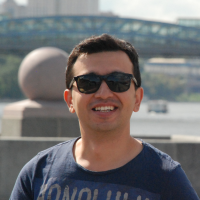
Asst.Prof.Dr., Fırat Altun, was born in Diyarbakır, Turkiye, and began his formal musical education at the Diyarbakır Anatolian Fine Arts High School, where he cultivated his foundational skills in music. His academic journey continued with a Bachelor’s degree in Music Education, during which he engaged deeply with the polyphonic traditions of Turkish music, advanced his technical and performance skills on the cello, and developed a rigorous understanding of choral conducting and aural skills. After completing his undergraduate studies, Fırat Altun furthered his academic pursuits with a Master’s degree in Music Education. His scholarly path then led him to the University of York at the United Kingdom, where he was awarded a competitive scholarship to undertake doctoral research at a leading institution in Music. His doctoral studies encompassed interdisciplinary research in music cognition and affective response, advanced compositional techniques, and ear training. In addition to his academic endeavors, he actively contributed as a cellist to various performances with symphony and chamber orchestras. Fırat Altun’s research interests lie at the intersection of music perception and cognition, composition, and performance, with a particular focus on the cognitive and cultural dynamics of musical structure. His work contributes to a deeper understanding of how music is perceived, composed, and performed across different cultural contexts.
Affiliation: Harran University, Education Faculty, Fine Art Department, Şanlıurfa, Turkiye. Email: firataltun@harran.edu.tr ORCID: 0000-0002-2435-4909
ResearchGate: https://www.researchgate.net/profile/Firat-Altun
Academiaedu: https://york.academia.edu/FıratALTUN
GoogleScholar: https://scholar.google.com/citations?user=eAhY16YAAAAJ&hl=tr
Advisory Board
Editors/Field Editors



International Editorial Board Member

Asmati Chibalashvili is an Associate Professor at Kyiv National P. I. Tchaikovsky Music Academy; Deputy Director for Research, Modern Art Research Institute of the National Academy of Arts of Ukraine; Member of the Ukrainian Composers’ Union. She graduated from the Odesa State Music Academy named after A. V. Nezhdanova (class of Prof. Karmella Tsepkolenko, 2006). Completed postgraduate studies at the Kyiv National P. I. Tchaikovsky Music Academy under Prof. Yevhen Stankovych (2010). Awarded a diploma by the Ambassador of Georgia to Ukraine for promoting Georgian art and developing Ukrainian–Georgian cultural relations (Kyiv, 2002). Winner of the 1st Prize at the International Competition of Young Composers Gradus ad Parnassum (Kyiv, 2016). Recipient of the Silver Medal of the National Academy of Arts of Ukraine (2021). VUIAS Fellow in the Open Society University Network/CEU Institute for Advanced Study (Budapest, 2023–2024). Nonresidential Visiting Scholar at Indiana University (2024–2025). Her creative work combines compositional practice with academic research, focusing on posthumanism, contemporary Ukrainian music, and the artistic documentation of social crises. Her recent projects experiment with multimedia and visual or performative elements to reflect on themes of resilience, transformation, and collective experience. Her music has been performed at numerous international festivals, including Two Days and Two Nights of New Music (Odesa, 2006–2024), Music Marine Fest (Odesa, 2006), Season Premiere (Kyiv, 2007), International Youth Music Forum (Kyiv, 2007, 2009, 2011), Music Tribune of Kyiv’s Youth (Kyiv, 2008), Young Composers of Ukraine (Lviv, 2009), GOGOLFEST (Kyiv, 2012, 2014), Days of New Music (Kharkiv, 2012), Contrasts (Lviv, 2013, 2022, 2024), Nordic Saxophone Festival (Aarhus, Denmark, 2016), World New Music Days ISCM (Vancouver, Canada, 2017), Kyiv Music Fest (2022), and Bouquet Kyiv Stage (2024), among others.

Vesna Svalina, Ph.D. (1968) is an associate professor in the field of music education and president of the Music Subdepartment at the Faculty of Education, Josip Juraj Strossmayer University of Osijek. Since 2020, she has also been working at the University of Slavonski Brod at the Department of Social Sciences and Humanities, and during the summer semester of the 2023/24 academic year, she taught courses at the University of Zagreb (Faculty of Teacher Education) titled Methodology of Music Education I and Methodology of Music Education III. She graduated from the study program of music pedagogy of the University of Osijek (Faculty of Education) in 1991. She holds a Master of Music Education degree from the University of Zagreb (Music Academy, 2009) and a doctoral degree in early education and compulsory education from the Faculty of Teacher Education of the University of Zagreb (2013). Dr. Svalina has published her scientific work in journals and conference proceedings, both nationally and internationally. She is the author of two books in the field of music pedagogy, has published over forty scientific papers, and has participated in numerous national and international scientific conferences (Cambridge – UK; Paris – France; Copenhagen - Denmark; Rostock – Germany; Cetinje – Montenegro; Ljubljana, Ruše – Slovenia; Beograd, Kragujevac – Serbia; Dubrovnik, Osijek, Pula, Split, Zadar, Zagreb – Croatia). Her scientific interest is focused on the music education in primary and secondary schools, musical giftedness, creativity in music education, music therapy and inclusive education, application of technology in music education, development of personal and social skills through music, listening to music as a teaching area. She participated in numerous international scientific conferences at home and abroad. From 2015 to 2016 she was head of the scientific research project Listening to music as an important subject area in the primary music curriculum. From 2009 to 2013 she was involved in the project Development of Creativity in Lifelong Teacher Education, and from 2018 to 2021 in the project Giftedness in the Artistic Field - Analysis of the Situation Among Primary School Pupils in Terms of Artistic and Musical Giftedness. From 2015 to 2018 she was managing editor of the journal Life and School. Today, she is a member of the editorial boards of two journals: SN Social Sciences, and Journal for the Interdisciplinary Art and Education. She has also given numerous concerts with the choirs, both in Croatia and abroad (Italy, Germany, Austria, Slovenia, Switzerland). She won numerous first prizes, both nationally and internationally, at different choir competitions (11 first prizes at national and 7 at international competitions). She also won three special prizes: for the best performance of the compulsory song, for the best interpretation of the song composed by a Croatian composer, and for the artistically most convincing conductor.
 Web
Web
Vildan IŞIK is an artist and scholar whose work explores the dynamic intersections of painting, holography, visual culture, and emerging technologies. Born in Osmaniye in 1973, she graduated from Dokuz Eylül University’s Faculty of Fine Arts, Department of Painting in 2000 with a thesis titled “The Problematic of Chance and Coincidence in the 20th Century.” She later obtained her master’s degree in 2006 from the Institute of Social Sciences at Cumhuriyet University, where her thesis—“Art Debates in Turkish Painting between 1930–1970 and the Artist at the Centre of the Debates: Bedri Rahmi Eyüboğlu”—focused on the role of Eyüboğlu in shaping critical discourse within modern Turkish art.
Her academic and artistic journey has consistently bridged theory and practice. In 2012, she conducted research on holography in Seoul, South Korea, which laid the groundwork for her subsequent doctoral thesis entitled “Holography as a Medium of Artistic Expression”, completed at Gazi University’s Institute of Fine Arts in 2013. This study culminated in a curated exhibition that explored the relationship between holography, painting, and photography. She earned her proficiency in art (the equivalent of a doctoral degree) and was awarded the title of Associate Professor in 2016.
Since then, she has been serving as a faculty member at Düzce University’s Faculty of Art, Design, and Architecture, the Department of Basic Art Sciences. Prior to her current appointment, she held various academic and institutional positions between 1999 and 2014.
Dr. Işık’s research and artistic practice center on the evolving relationship between art and digital media, with particular emphasis on artificial intelligence, iconography, and interdisciplinary aesthetics. She has published extensively in peer-reviewed journals and presented her work at numerous international conferences on art and design.
Her recent solo exhibitions, Urban Mutation (2024) and Holographic AI Glitch (2025), engage with themes such as algorithmic error, glitch aesthetics, and urban transformation. Through a practice that integrates critical theory, technological experimentation, and visual inquiry, Vildan IŞIK continues to make a multifaceted contribution to contemporary visual culture as both a researcher and an artist.
Received her Ph.D. degree from The Department of Architecture at Karadeniz Technical University in 2009. She has continued her work as a professor at the same institution. She has published articles in English and Turkish in various academic journals on topics such as architectural design, transparency in architecture, perception and meaning in architecture, and cultural heritage, which are her main research interests, and teaches various courses at the undergraduate and graduate levels in these fields.
Dr. Rita L. Irwin is an artist, researcher, and teacher deeply committed to the arts and education. She is a Distinguished University Scholar and Professor of Art Education in the Department of Curriculum and Pedagogy at the University of British Columbia in Vancouver, British Columbia, Canada. Rita served as Associate Dean of Teacher Education at UBC from 2005-2015 and Head of the Department of Curriculum Studies from 1999-2005. Rita has been an educational leader for a number of provincial, national and international organizations including being President of the Canadian Society for the Study of Education, Canadian Association of Curriculum Studies, Canadian Society for Education through Art, and the International Society for Education through Art.
Research Interest
Irwin's research interests have spanned in-service art education, teacher education, socio-cultural issues, curriculum practices across K-12 and informal learning settings, and a/r/tography. Well known co-edited books include Revisions: Readings in Canadian Art Teacher Education (with K. Grauer & M. Emme). Storying the World: The Contributions of Carl Leggo (with E. Hasebe-Ludt & A. Sinner), Provoking the Field: International Perspectives on Visual Arts PhDs in Education (with A. Sinner & J. Adams), Visually Provoking: Dissertations in Art Education (with A. Sinner & T. Jokela) and The Flaneur and Education Research: A Metaphor for Knowing, Being Ethical and New Data Production (with A. Lasczik).
AwardsIn recognition of her many accomplishments and commitments, she has received a number of awards for her scholarship, service and teaching including the distinction of Distinguished Fellow of the National Art Education Association in the USA, the Ted T. Aoki Award for Distinguished Service in Canadian Curriculum Studies (CACS), the Canadian Art Teacher of the Year Award (CSEA), the Elliot Eisner Lifetime Achievement Award (NAEA) and the Killam Award for Excellence in Mentoring (UBC).
Website: https://www.ritairwin.ca/
Language Editor

Layout
Editor-in-Chief-
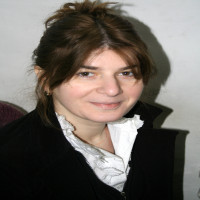
Assoc.Prof. Gvantsa Ghvinjilia is a musicologist, a member of the Georgian Composers' Union, an Associate Professor at the Tbilisi State Conservatoire, and the Chair of its Dissertation Board. She is also a guest lecturer at the Shota Rustaveli Theatre and Film Georgia State University. She is a scholarship recipient of composer Zakaria Paliashvili and the President of Georgia. She holds a guest senior lecturer position at Shota Rustaveli Theatre and Cinema Tbilisi State University. Dr. Ghvinjilia was a jury member for the prestigious Tsinandali Awards in 2022
From 2006 to 2013, she held the roles of PR Manager and Head of the Literary Department at the Tbilisi Zakaria Paliashvili Opera and Ballet State Theatre. Her research interests encompass interdisciplinary research, transcultural studies, multimedia music, and AI-generated music. Within the framework of the Erasmus+ "Mobility+" program, she participated in working visits to Belgium, France, Poland, and Sweden. She regularly takes part in national and international conferences. Gvantsa Ghvinjilia is the Editor-in-Chief of the Journal of Music Theory and Transcultural Music Studies and the Journal for Interdisciplinary Art and Education. She is also a managing editor of the Rast Musicology Journal and the Kufa Journal of Arts. In addition, she serves as the Chair of the Rast Music Congress and the International Symposium on Interdisciplinary and Progressive Arts & Education.
Last publication: The Evolution of Music and Musician Students' Views on Ethical Dilemmas Related to Transhumanistic Music — https://dergipark.org.tr/en/pub/rastmd/issue/92822/1684433
ResearchGate profile: https://www.researchgate.net/profile/Gvantsa-Ghvinjilia?ev=hdr_xprf
Google Scholar: https://scholar.google.com/citations?user=JvTcsEoAAAAJ&hl=en
Website: https://gvantsaghvinjilia.com/
